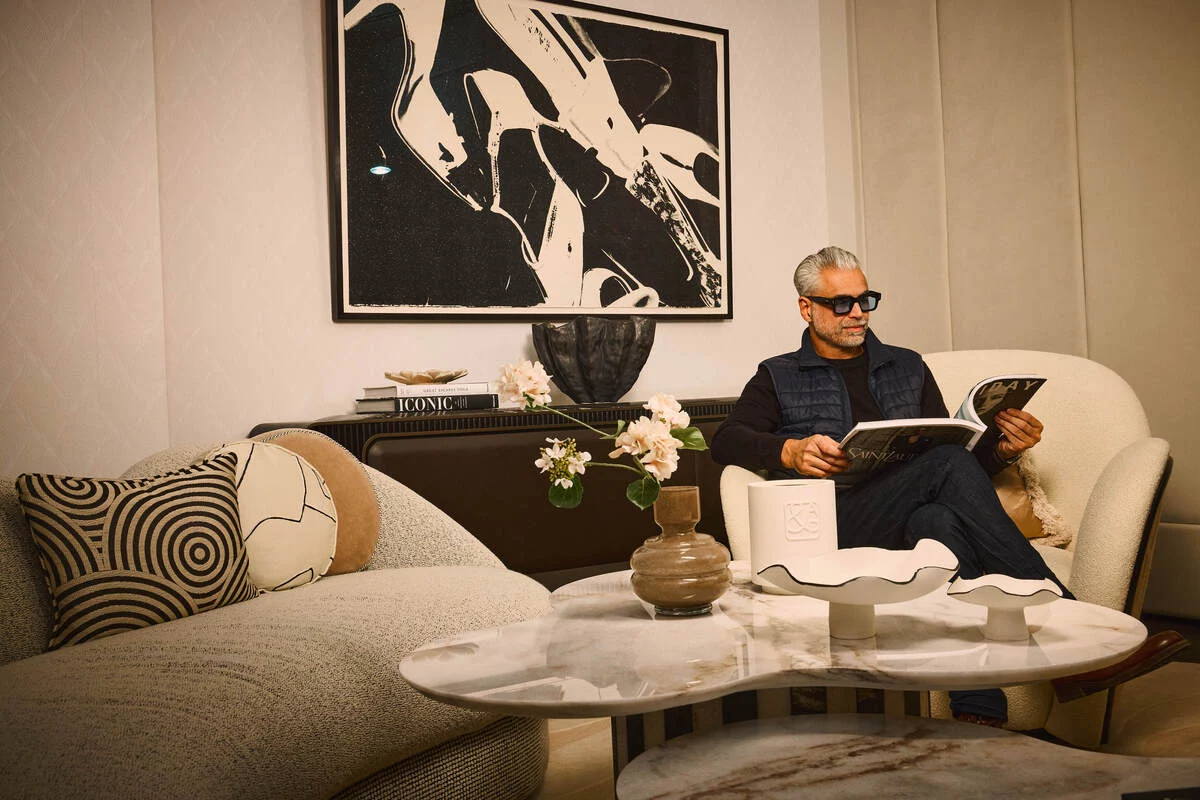
The Evolving Airport Lounge | Creating a Home Away from Home
FOR THE WORLD’S MOST DISCERNING TRAVELLERS, LUXURY IS INCREASINGLY DEFINED NOT BY EXCESS, BUT BY HOW EFFORTLESSLY AN EXPERIENCE ANTICIPATES THEIR NEEDS.
The expectations shaped by exceptional private homes, five-star hotels and private members’ clubs do not disappear at the airport. If anything, they become more important. Travel is inherently transitional, and the very best environments create a sense of calm, privacy and belonging precisely when those qualities are hardest to achieve.
This is changing the role of the airport lounge. No longer simply somewhere more comfortable to wait, the most considered private terminals are becoming destinations in their own right: places where hospitality, discretion, wellbeing and highly personalised service come together within an environment that feels instinctive rather than institutional.
At Oliver Burns Studio, our approach to these spaces is informed by more than two decades designing exceptional private residences for some of the world’s most discerning families. We understand how our clients live, entertain and travel, and importantly, the level of discretion and intuitive service they expect wherever they are in the world.
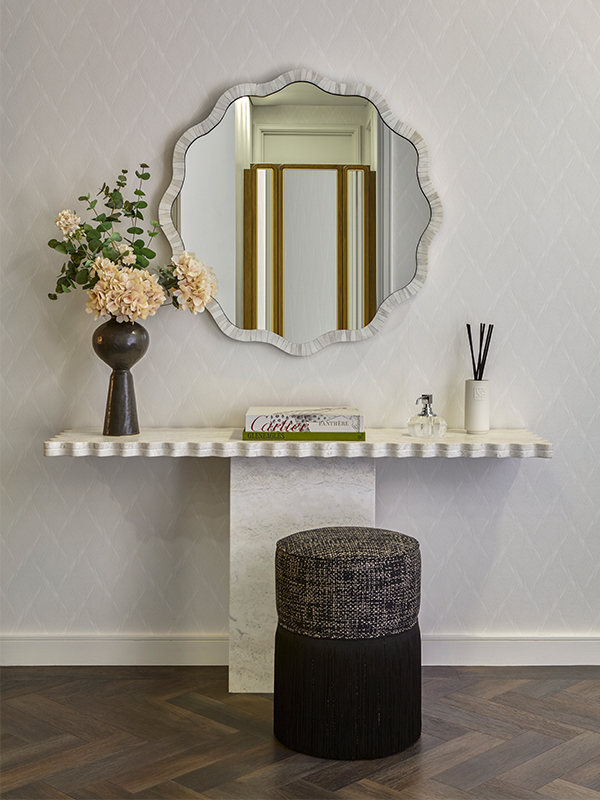
It was this understanding that informed our work at The Windsor by Heathrow VIP. Rather than approaching the project through the conventional language of aviation, we looked to the principles of a beautifully considered private residence: comfort, character, privacy and a genuine sense of welcome. These were then layered with the hospitality, operational and complex security requirements of one of the world’s most demanding travel environments.
The result is less about creating a ‘luxury lounge’ and more about redefining what the moments around travel can feel like.
PRIVACY BY DESIGN
True luxury has always had a close relationship with privacy. For the clientele using a private terminal, however, discretion is not simply desirable; it can be fundamental.
Guests may include global business leaders, members of royal families, politicians and public figures, each travelling for entirely different reasons and with very different requirements. A family beginning a holiday needs something quite different from a principal travelling on business or a delegation moving through the airport on an official visit.
Good design needs to understand those nuances without making them visible.
At The Windsor, privacy is therefore embedded into the architecture and planning of the experience. Sightlines, circulation, thresholds and the relationship between public and private spaces all contribute to an environment in which guests can move intuitively and discreetly.
There is also a highly specialist security layer that goes far beyond the considerations of a conventional hospitality or residential project. Anti-terrorism measures and stringent security requirements have to be incorporated from the earliest stages of the design, alongside particular considerations around acoustic and information privacy. For certain guests, this extends to ensuring spaces are designed to minimise opportunities for concealed listening or surveillance devices.
These requirements can influence everything from spatial planning and detailing to the selection and coordination of materials, fixtures and services. Yet the challenge is to resolve them without allowing security to define the visual or emotional experience of the space.
Guests should never feel as though they have entered a fortified environment. The architecture quietly does its job in the background, allowing the experience at the forefront to remain warm, residential and beautifully considered.
The same principle applies throughout the airport’s rigorous security framework. Necessary processes need to happen efficiently and discreetly, often around guests travelling with entourages and security teams. Our responsibility as designers is to absorb that complexity into the environment so that what is highly orchestrated behind the scenes feels entirely effortless from the other side.
That principle, making complexity disappear, is fundamental to our philosophy of Thoughtful Luxury.
HOSPITALITY AS PART OF THE DESIGN
At The Windsor by Heathrow VIP, Michelin-starred dining by Jason Atherton forms part of a much wider hospitality experience. For us, that means thinking beyond the food itself to consider the complete ritual around it: where and how a guest chooses to dine, the comfort of the seating, the quality of the light, the tactility of the tableware and the atmosphere created around them.
It is the same way we would approach dining within a private residence. The experience is never created by one element in isolation.
Behind that apparent simplicity sits an enormous amount of practical consideration. A private terminal must perform continuously throughout the day. Materials need to withstand significant use while retaining their beauty. Furniture needs to work equally well for guests and service teams. Circulation must support the choreography of hospitality without allowing the operational aspects of that hospitality to dominate the space.
When it works, the guest sees none of this. They simply feel that everything happens where and when it should.
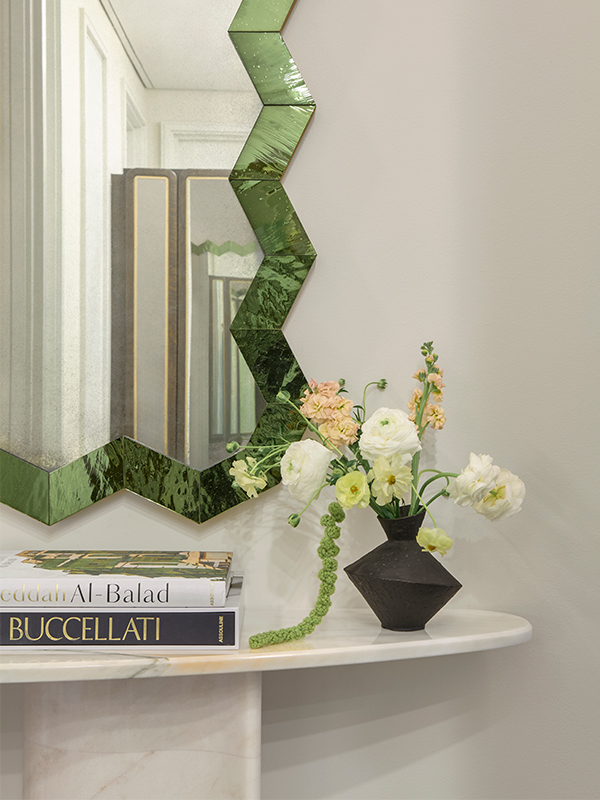
CREATING A HOME AWAY FROM HOME
The phrase ‘home away from home’ is often used in hospitality, but for us its meaning is not literal. We are not trying to recreate a drawing room inside an airport.
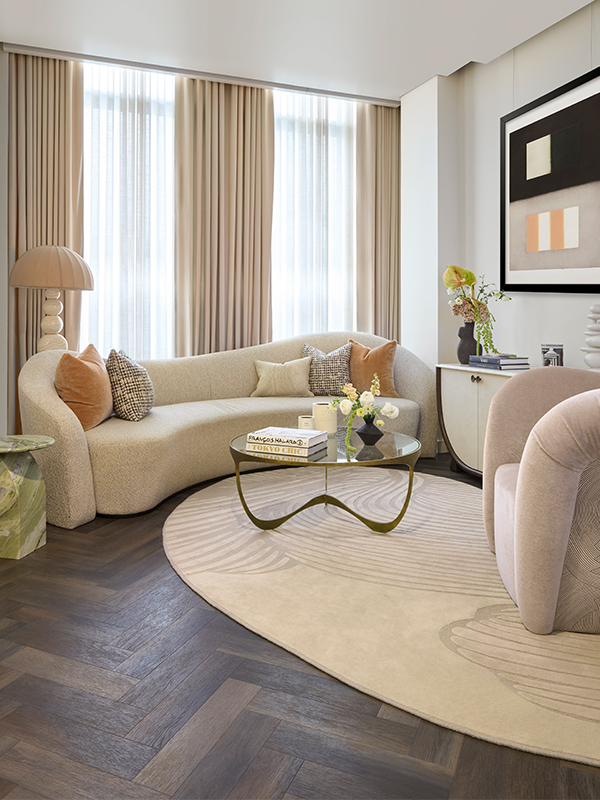
What matters are the qualities that make the best homes feel effortless to inhabit: choice, comfort, familiarity and the freedom to use a space in your own way.
A guest should be able to arrive and instinctively understand where to settle, where to place their belongings, where to dine or work, and where to retreat if they want privacy. The environment should accommodate different rhythms rather than dictate a single way of using it.
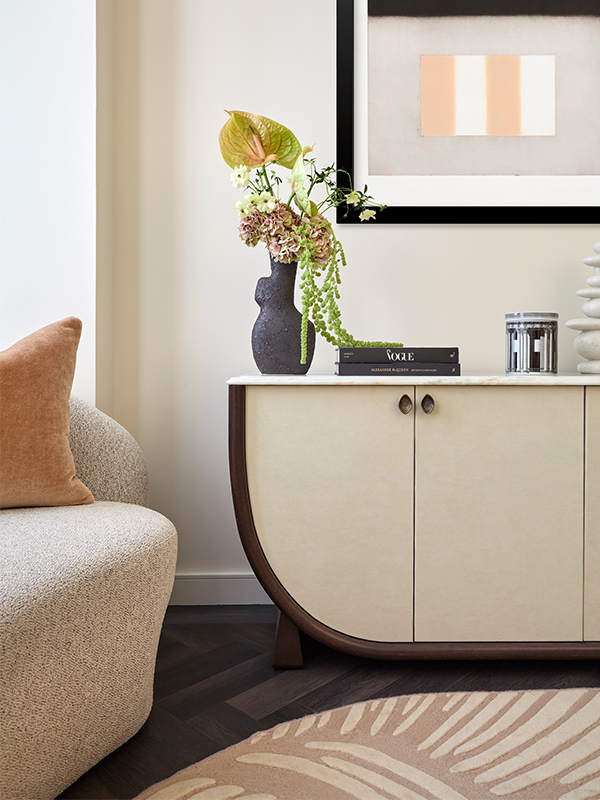
Materiality is central to this. Natural stone, timber, beautifully crafted joinery and tactile textiles bring warmth and permanence, but in an aviation environment beauty can never exist independently of performance. Every material decision has to reconcile the residential quality we want the guest to experience with the durability, maintenance and regulatory demands of the setting.
That intersection between beauty and intelligence is where the design becomes interesting.
MAKING SPACE FOR WELLBEING
As travel has evolved, so too has our understanding of wellbeing. Increasingly, it isn’t something that can simply be added to an interior as a room or amenity. It is created through the entire environment.
Light, acoustics, scent, temperature, materiality and spatial planning all influence how we feel, often without us consciously registering why. In a travel environment, where guests may already be tired, time-poor or under pressure, those details matter enormously.
The most successful spaces therefore don’t announce that they have been designed for wellbeing. They simply make people feel better.
A SENSE OF PLACE
Luxury travel has historically had a tendency towards a universal aesthetic: beautifully executed, perhaps, but sometimes disconnected from where in the world you actually are. We believe the opposite is becoming increasingly important.
At The Windsor, we wanted guests to feel a connection to Britain without resorting to an overtly British design language. Art, craftsmanship, materials and references to the heritage of the Heathrow VIP brand create that sense of place quietly and intelligently.
There is an opportunity for other private aviation terminals to do the same, drawing on local artists, crafts people, materials, landscape and cultural references to create spaces that feel connected to their location while still offering the comfort, discretion and exceptional standards expected by an international clientele.
Luxury should feel of its place, not simply placed within it.
WHERE AIRPORT LOUNGES GO NEXT
The boundaries between residential design, hospitality, private members’ clubs and travel are becoming increasingly blurred. The most exciting airport environments will draw from all of them.
Technology will undoubtedly play a greater role, as will wellbeing and increasingly intelligent spatial planning. But innovation alone isn’t enough. The real opportunity lies in how invisibly these elements can be integrated around the individual.
For us, the future of luxury travel is not about adding more. It is about understanding more: how people want to feel, how they want to move, when they want interaction and when they want privacy.
The best travel experiences will be those in which architecture, interiors, technology, security, hospitality and service cease to feel like separate components.
They will simply feel effortless.

Fashion has always been intrinsically linked with Interior Design, expressing ourselves through the way we dress and the way we dress our home. This month we will be exploring this link and looking at how we have used fashion to influence our work.
Fashion has always been intrinsically linked with Interior Design, expressing ourselves through the way we dress and the way we dress our home. This month we will be exploring this link and looking at how we have used fashion to influence our work.

In our exciting new series ‘Conversations in Craftmanship’, we will be showcasing the work of our favourite artisans and reveal the high level of skill and craftmanship that goes into creating their designs.
In our exciting new series ‘Conversations in Craftmanship’, we will be showcasing the work of our favourite artisans and reveal the high level of skill and craftmanship that goes into creating their designs.
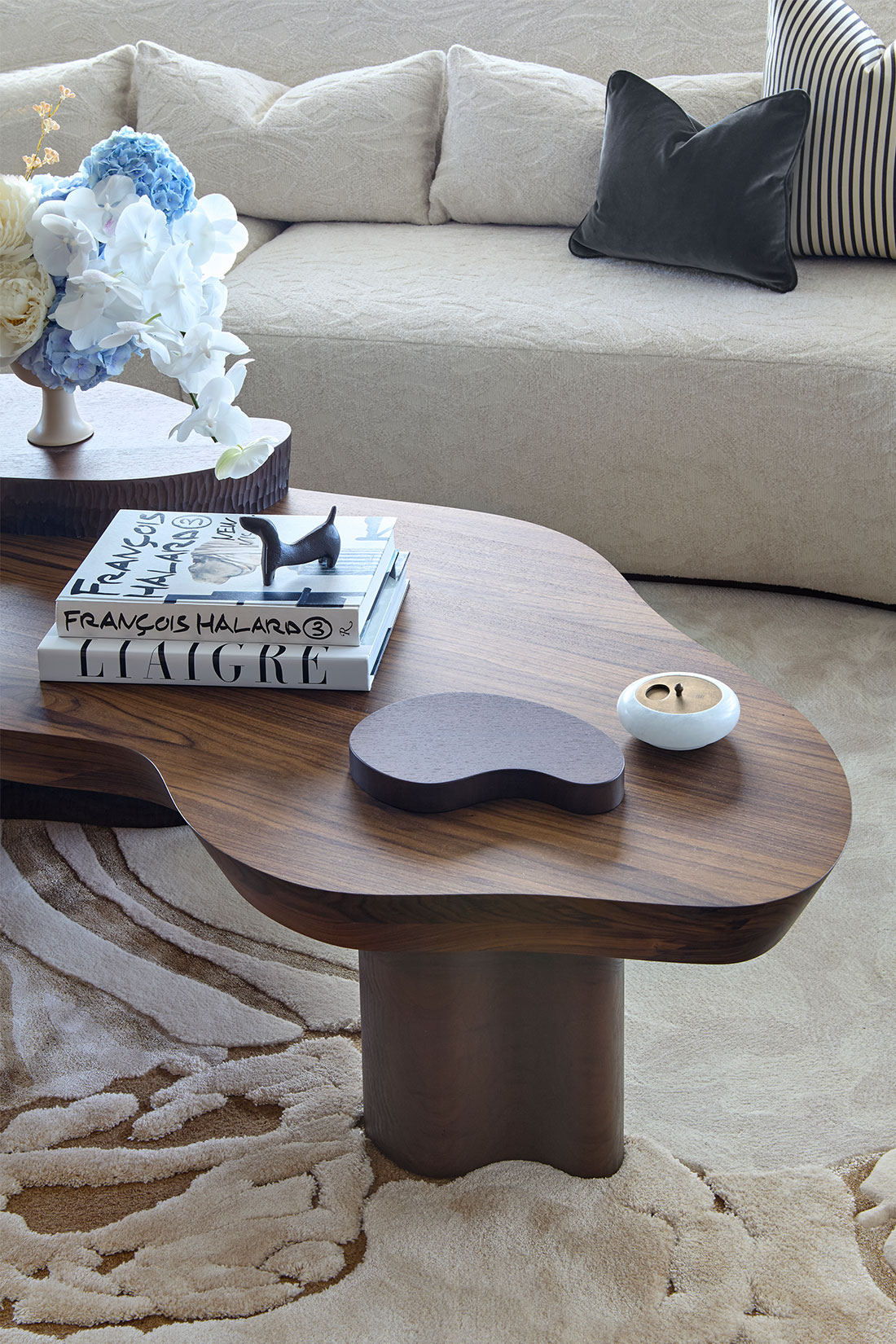
Oliver Burns Studio was commissioned by Almacantar to design a rare flagship show apartment at The Bryanston, creating an interior that embodies the building's architectural vision while showcasing the very best of super-prime living.
Oliver Burns Studio was commissioned by Almacantar to design a rare flagship show apartment at The Bryanston, creating an interior that embodies the building's architectural vision while showcasing the very best of super-prime living.